Entertainment
The Real Christopher Robin Struggled with His Winnie the Pooh Legacy as an Adult, Faced Criticism from Family After Marrying His First Cousin

NEED TO KNOW
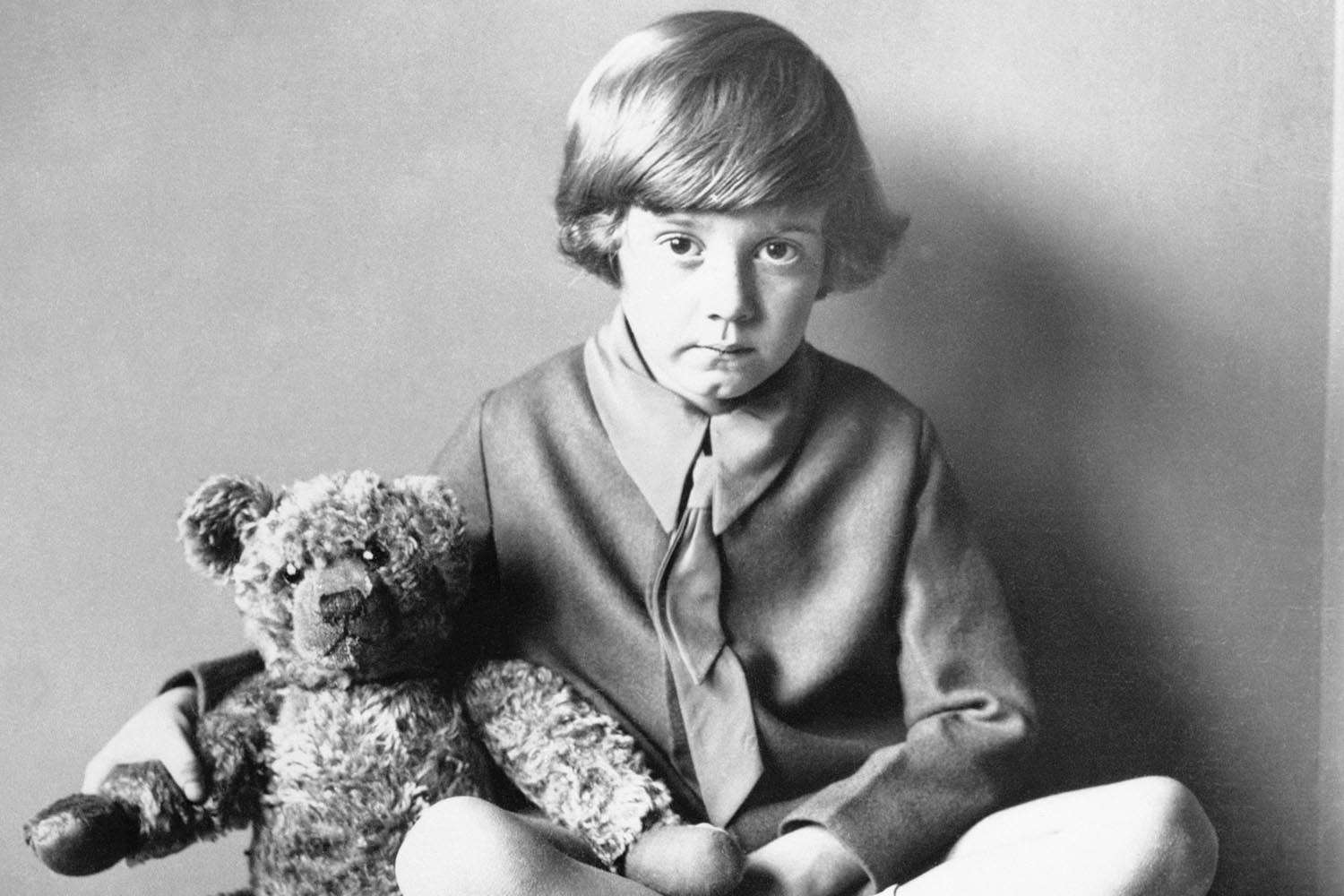
- Winnie the Pooh‘s Christopher Robin was based on A.A. Milne’s son of the same name
- Gyles Brandreth, broadcaster, former MP and friend to Christopher Robin Milne, opened up about the real man behind the character with Joe Sibilia on Nostalgia Tonight with Joe Sibilia on AM 970 The Answer
- Brandreth shares some of the complications that came with being Christopher Robin for the character’s namesake
Being Christopher Robin was more difficult than most could imagine.
Gyles Brandreth, broadcaster, former MP and friend to Christopher Robin Milne, opened up about the man behind the character while chatting with Joe Sibilia on Nostalgia Tonight.
Brandreth, author of Somewhere: A Boy and a Bear, explained that while Christopher Robin loved being “the storybook boy in the 1920s when he was a little boy,” it became more difficult as he got older.
“He was a lovely man,” Brandreth said of Christopher Robin. “He’d loved being Christopher Robin, the storybook boy in the 1920s when he was a little boy. But when he was older, he had reservations about it.”
Never miss a story — sign up for PEOPLE’s free daily newsletter to stay up-to-date on the best of what PEOPLE has to offer, from celebrity news to compelling human interest stories.
“When Christopher Robin was a little boy up to the age of 10, he was so happy to be Chris Robbins and he loved Winnie the Pooh. He liked having his photograph taken,” Brandreth explained.
“Then, when he went away to boarding school people began to tease him. He was Christopher Robin, and then when he joined the army and after the Army and after University, and he was in his life, trying to get a job. He would go to interviews and people would say, ‘Oh, your name’s Milne. Are you by any chance related to the famous writer?’ or ‘Your initials are CRM. You must be Christopher Robin. How’s Winnie the Pooh?’ and that infuriated him.”
He continued, “He got to the stage where he really couldn’t stand it. And in fact, he accused his father of building his reputation by standing on a small boy’s shoulders. And the father and son eventually fell out. And there, the family became a divided family.”
Brandreth explains that when he met Christopher Robin, he was in his 60s and “had mellowed” about the situation, though he still wasn’t enthusiastic about discussing it.
“I think he began to understand his father a bit more towards the end. His father, A.A. Milne, resented the fact that Winnie the Pooh brings out a huge success. It has eclipsed all his other achievements, and that’s why, uh, the real Winnie the Pooh, the original Winnie the Pooh, is now the New York Public Library.”
He later noted, “When Milne’s American publisher, E.P. Dutton, got in touch and said, ‘We’d love to have Winnie the Pooh,’ he said, ‘I don’t care. I don’t want him anymore.’ So he was sent willingly.”
Winnie-the-Pooh first appeared by name in a children’s story commissioned by London’s Evening News for Christmas Eve 1925. In 1926, the children’s book Winnie the Pooh was first published.
Christopher Robin led an interesting life, which included marrying his first cousin, Lesley de Selincourt. The couple, who did not grow up knowing one another because of estrangements in their families, faced criticism from both sets of parents for the union.
“They left London to get away from being part of the whole, as they thought, Winnie the Pooh circus went down to live in the West country, where they did very happily,” Brandreth shared.
“They had a daughter who suffered from cerebral palsy, and they never took any of the money —because of Disney, we’re talking about hundreds of millions — [but] in the end, they took a small amount of it. Not a penny of it went to Christopher Robin himself or to his wife. He took a small amount of it to look after their daughter who had cerebral palsy, and when she died, the money was left in a trust and is a charity called the Claire Milne trust, which is giving away millions to children and young people with disabilities in the UK,” he shared.
“So there was a bit of a Honeypot at the end of the rainbow in a sense.”
Read the full article here






Kyle Richards’ $2,900 Aspen Jacket Has a $20 Lookalike — And It’s Shockingly Chic

Joey Lawrence Reflects on Filming Brotherly Love in the ’90s, Admits He Didn’t Realize Those Would Be ‘Some of the Best Days’

Matt Prokop’s ex claims she suffered ‘years of abuse’ after Disney actor’s child pornography arrest

Colombian singer Yeison Jiménez, 34, dead in plane crash hours before concert

Maren Morris Slams ‘Dicey’ Country Music Award Shows, Says ‘No One Is Very Friendly’

ZZ Top’s Billy Gibbons Claims Gillette Offered Him and Dusty Hill $1 Million Each to Shave Their Iconic Beards

After Playing a Young Jennifer Garner in 13 Going on 30, This Actress is Paying Homage to the Iconic Film

Cher thinks Kristen Bell deserves better than Dax Shepard

Little Mix alum Jesy Nelson’s 8-month-old twins diagnosed with severe muscle disease

What will ‘Heated Rivalry’ stars Connor Storrie and Hudson Williams wear to the Met Gala 2026?
Joey Lawrence Reflects on Filming Brotherly Love in the ’90s, Admits He Didn’t Realize Those Would Be ‘Some of the Best Days’

Kristin Davis Reveals If She Thinks the Chapter Is Officially Closed for Her Sex and the City Character (Exclusive)

Tom Holland ‘Would Always Come’ Visit Fiancée Zendaya on the Euphoria Set, Star Chloe Cherry Says (Exclusive)

Sarah Jessica Parker Shares What Makes Her ‘a Little Bit Heartsick’ When She Thinks Back on Her Career (Exclusive)

Cindy Crawford Reveals How Her Double Date Nights with George Clooney Have Evolved Over the Years (Exclusive)
-
 Entertainment4 days ago
ZZ Top’s Billy Gibbons Claims Gillette Offered Him and Dusty Hill $1 Million Each to Shave Their Iconic Beards
-
 Entertainment4 days ago
After Playing a Young Jennifer Garner in 13 Going on 30, This Actress is Paying Homage to the Iconic Film
-
 Music6 days ago
Cher thinks Kristen Bell deserves better than Dax Shepard
-
 Music7 days ago
Little Mix alum Jesy Nelson’s 8-month-old twins diagnosed with severe muscle disease
-
 TV4 days ago
What will ‘Heated Rivalry’ stars Connor Storrie and Hudson Williams wear to the Met Gala 2026?
-

 TV5 days ago
Andy Cohen blasts ‘margarita lady’ Bethenny Frankel’s ‘suffocating’ TikTok videos
-

 Royals6 days ago
Prince Harry’s reunion with royal family could happen sooner than expected
-

 Entertainment4 days ago
A$AP Rocky Admits He Was ‘Cold-Hearted’ Before Becoming a Dad, Says He’s ‘Way More Emotional’ Now